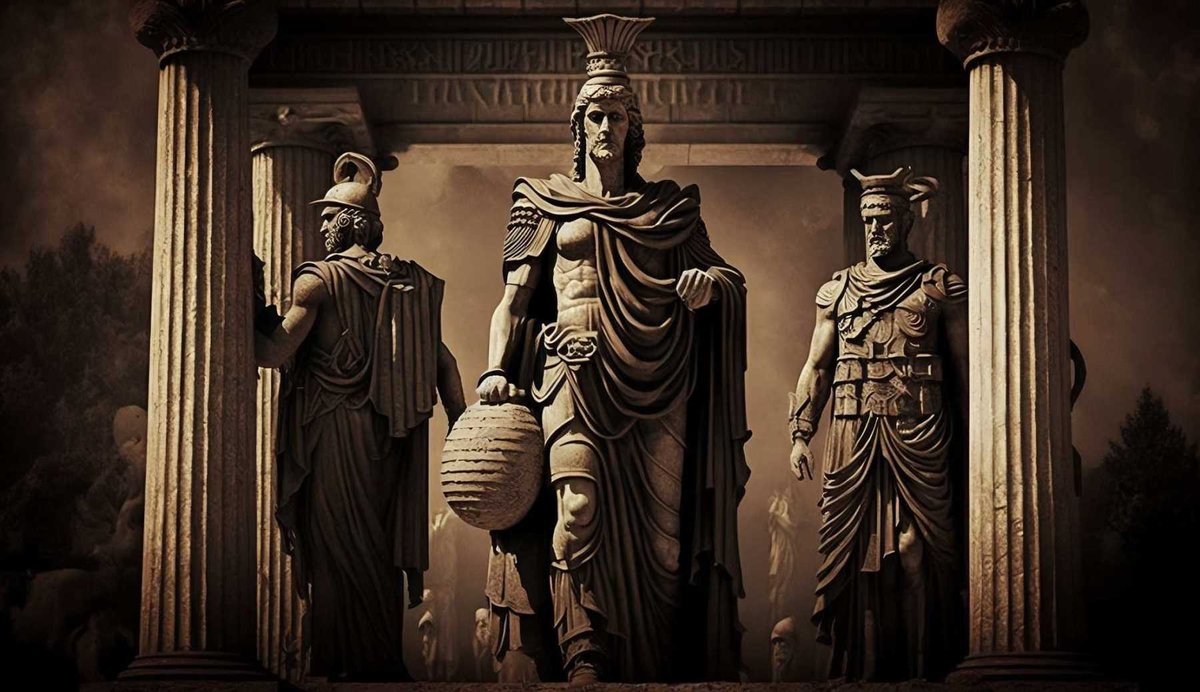
Creating a compelling male Roman character is about more than just a name; it's about summoning a figure steeped in history, status, and the very essence of a bygone empire. Yet, every epic tale, every immersive tabletop campaign, every meticulous historical reenactment begins with that foundational element: a name that rings true. If you've ever found yourself sifting through dusty tomes or struggling to invent a moniker that sounds authentically Roman without straying into the fantastical, you know the challenge. Thankfully, the digital age offers a powerful solution: a Roman name generator specifically designed for male characters, built to breathe life into your creations.
This isn't just a random word-pairing tool. Imagine an AI, trained on countless classical texts and ancient epigraphic records, ready to pluck the perfect praenomen, nomen, and cognomen for your Roman senator, humble farmer, or ambitious centurion. It’s about accuracy, immersion, and the sheer delight of discovering a name that feels utterly, undeniably right.
At a Glance: Crafting Your Roman Male Character's Name
- Authenticity First: Generate historically accurate male Roman names rooted in classical texts.
- AI-Powered Precision: Utilizes advanced AI trained on vast historical data for genuine results.
- Guide the Vibe: Use keywords like "rural centurion" or "urban merchant" to influence name outcomes based on role, traits, and social status.
- Optimize Your Search: Combine social class and occupation for the most nuanced names.
- Refine Your Results: Generate multiple lists to mix, match, and modify names until they fit perfectly.
- Beyond the Name: Use the name as a springboard for deeper world-building and character development, understanding Roman masculine archetypes.
Why Authenticity in Roman Naming Truly Matters
For anyone building a world set in ancient Rome, or even one inspired by its grandeur, authenticity is your bedrock. A character named "Maximus Thundercracker" might be memorable, but he'll shatter any illusion of historical accuracy faster than a gladius through parchment. Roman names were far from arbitrary; they were intricate reflections of family lineage, social standing, place of origin, personal characteristics, and even political allegiances. They told a story before the character even uttered a word.
The traditional male Roman naming system, known as the tria nomina, consisted of three parts:
- Praenomen (Given Name): Similar to a modern first name, though there was a surprisingly small pool of common praenomina (e.g., Gaius, Lucius, Marcus, Publius, Quintus, Tiberius).
- Nomen (Clan Name): The most important part, indicating the gens or clan the individual belonged to (e.g., Cornelius, Julius, Fabius, Claudius). This was a badge of social and political identity.
- Cognomen (Family Name/Nickname): Initially a personal nickname (e.g., "Rufus" for red-haired, "Longus" for tall), it often became hereditary within a branch of a gens. Sometimes, an agnomen (an additional, honorary cognomen) was added for significant achievements, like "Africanus" for Scipio.
When you leverage a sophisticated Roman Name Generator for Male Characters, you're not just getting words; you're tapping into this complex system, ensuring that your character's name carries the historical weight and subtle meaning it deserves.
How to Master the Roman Name Generator for Male Characters
This isn't just about clicking a button and hoping for the best. To truly harness the power of an AI-driven generator, you need to understand its mechanics and how to provide the most effective input. Think of it as a collaboration between your creative vision and the AI's vast knowledge base.
Step-by-Step Guide to Generation:
- Enter Optional Keywords: This is where you infuse your character's essence into the search. Don't just think "Roman man." Think about his life, his role, his social standing.
- Roles: "centurion," "merchant," "scribe," "gladiator," "senator," "philosopher," "farmer."
- Traits: "ambitious," "humble," "meticulous," "brave," "wise," "scheming."
- Social Status: "plebeian," "patrician," "freedman," "slave" (though names for slaves and freedmen had their own unique conventions, which the AI might reflect).
- Examples: "rural centurion," "urban merchant," "ambitious patrician," "humble plebeian farmer."
- Choose the Number of Names: Decide how many name suggestions you want in a single batch. Starting with a larger number (e.g., 5-10) gives you more options to work with, especially for mixing and matching.
- Specify a Target Language (If Needed): While the default will likely be Latin-based Roman names, if there's an option for specific regional variations or linguistic influences, consider using it. For most authentic Roman names, sticking to the standard output is best.
- Click “Generate”: Let the AI do its work. You'll receive a list of historically grounded names tailored (to an extent) by your keywords.
Tips for Best Results: Shaping Your Character's Identity
The magic often lies in the details of your input. Here’s how to coax the most nuanced and compelling names from the generator:
- Combine Social Class and Occupation Cues: This is perhaps the most critical tip for achieving truly fitting cognomina. A "plebeian blacksmith" will likely generate a different set of names and cognomina than a "patrician general." The AI understands the subtle societal implications embedded in these combinations.
- Why this works: Many cognomina originated from occupations or physical traits associated with particular social strata. A patrician might have a cognomen reflecting an esteemed ancestor or a military victory, while a plebeian's might relate to a craft or a humble characteristic.
- Keep Keywords Concise: The AI isn't looking for a paragraph-long character bio. It excels with 3–6 descriptive words that provide clear, focused guidance. Think of them as precise tags rather than sentences.
- Good examples: "veteran legionary," "senatorial rhetorician," "provincial trader."
- Less effective: "a very old and wise man who used to be a soldier but now he just reads books all day."
- Utilize Multiple Generations for Variety: Don't settle for the first batch. Run the generator several times, perhaps with slightly tweaked keywords. This allows you to:
- Explore varied name structures: You might see different combinations of praenomina, nomina, and cognomina.
- Mix, Match, or Modify: Perhaps you love the praenomen from one list, the nomen from another, and the cognomen from a third. The best part is that since these are historically accurate components, combining them often results in a perfectly valid (and unique) Roman name. Don't be afraid to take a generated "Marcus Agrippa" and turn him into "Marcus Petronius" if "Petronius" fits your vision better.
Example Roman Names and Their Character Echoes
Let's look at some exemplary names and how they subtly (or overtly) hint at a character's background, personality, or role. These demonstrate the depth the generator can achieve:
- Marcus Agrippa: A powerful, patrician praenomen (Marcus) paired with a respectable nomen (Agrippa). The name itself exudes a sense of traditional Roman values, making it surprisingly fitting even for a humble farmer, suggesting he comes from a well-established, perhaps rural, family line that has seen better days, or simply values the soil.
- Quintus Metellus: "Quintus" (meaning fifth) is a classic praenomen. "Metellus" belongs to a prominent plebeian gens that rose to great political power. This combination suggests a meticulous scribe—someone from a family with a history, perhaps educated, diligent, and rising through skill.
- Gaius Flavius: "Gaius" is extremely common. "Flavius" (meaning "yellow" or "golden") was a widespread gens, often associated with the working class but later rising to imperial prominence. A retired centurion with this name could be a relatable, salt-of-the-earth veteran, perhaps ennobled by his military service.
- Rufus Petronius: "Rufus" literally means "red-haired," a classic descriptive cognomen. "Petronius" is a respectable gens. A stargazing individual with this name might be seen as eccentric but learned, his distinctive appearance ("Rufus") making him stand out.
- Cassius Varinus: "Cassius" is a well-known gens. "Varinus" could be a lesser-known nomen or a cognomen. As a skilled drummer, this name feels grounded, perhaps belonging to someone valued for their craft rather than their political lineage.
- Magnus Julius: "Magnus" (meaning "great") is often an agnomen or a grand cognomen. Paired with the iconic "Julius" gens, this name immediately conjures images of ambition, power, and perhaps a direct (or claimed) lineage to illustrious figures. An ambitious politician would certainly fit this grand title.
- Septimus Cato: "Septimus" (meaning "seventh") is a rarer praenomen. "Cato" is a highly respected cognomen associated with wisdom and stoicism. A potter with this name might be a master of his craft, respected in his community for his skill and perhaps a quiet, thoughtful demeanor.
- Aulus Porcius: "Aulus" is a less common but still traditional praenomen. "Porcius" is a relatively humble gens but one that produced respected figures. A teacher of rhetoric with this name would command respect, his name suggesting a solid, traditional background in learning.
- Tiberius Varro: "Tiberius" is a distinct praenomen, often associated with emperors. "Varro" is a prominent gens that produced influential scholars and writers. A tavern owner named Tiberius Varro could be a man of some means, perhaps a retired soldier or a member of a less distinguished branch of a noble family, now running a respectable establishment.
- Lucius Aurelius: "Lucius" is a very common praenomen. "Aurelius" is a prestigious gens, eventually the name of an emperor. A scholar who copies texts and shares prophecies could be from an old, venerable family, his role reflecting intellectual pursuits and perhaps a touch of mysticism.
Notice how each name, even without additional context, offers a hint, a flavor, a starting point for imagination. The Roman Name Generator for Male Characters leverages this inherent storytelling quality of historical names.
World-Building: Grounding Your Male Roman Archetype
A name is a powerful seed for character and world-building. The very concept of the male Roman archetype—embodying authority, political ambition, dominance, and control—profoundly shapes your narrative's landscape. Masculinity in Rome was defined by strength, influence, and the strategic alliances forged to maintain power. This dynamic permeated every facet of society, demanding deference and compliance from subordinates and rivals alike. Opposition was rarely tolerated, often met with swift repercussions or social exclusion.
Consider how your chosen Roman name slots into this framework. Does "Magnus Julius" stride through the forum with an air of inherited power, his name opening doors and striking fear? Or does "Marcus Agrippa," the humble farmer, bear his respected family name with quiet dignity, perhaps becoming an unexpected voice for his community?
Key World-Building Questions to Drive Your Narrative:
Once you have that perfect name, ask yourself these questions to deepen your character's impact on their world:
- Who feels compelled to align with this Roman’s ambitions, and who actively resists? A well-chosen name can instantly signal allegiances or provoke rivalries. Does his name evoke respect or resentment among various factions?
- What actions must courtiers take to navigate the male-dominated power plays surrounding this character? If your character, say, "Lucius Aurelius," holds sway, how do others vie for his attention or attempt to undermine him through the intricate social dance of Roman politics?
- Which factions thrive under this Roman's regime, and which are oppressed or marginalized? Your character's name and family connections could be a symbol of either prosperity or hardship for different groups within your world. Does his nomen represent the old guard, a new rising power, or a radical shift?
These questions push beyond a simple name, transforming it into a cornerstone of your narrative's socio-political fabric. The Roman Name Generator for Male Characters provides the initial spark, but you are the architect who builds the empire around him.
Beyond the Tria Nomina: Understanding Roman Identity
While the tria nomina was the standard for Roman citizens, particularly during the Republic and early Empire, naming conventions could vary. Freedmen, for instance, often adopted the praenomen and nomen of their former master, retaining their original slave name as a cognomen. This reflected their new status and their continuing connection to their former household. Provinces, too, had their own naming quirks, often blending Roman names with local traditions.
Understanding these nuances, even if you don't explicitly input them into the generator, helps you interpret the results. If the generator suggests a name that seems a little "off" from the strict tria nomina pattern, it might be hinting at a character from a specific time period, social status, or geographical origin that deviated from the norm. This depth adds layers to your character without you having to be a Latin scholar.
Refining Your Character: When the Generated Name Isn't Quite Right
Sometimes, the generated names are good, but not perfect. That's where your creative judgment comes in.
- Analyze the Components: Look at the praenomen, nomen, and cognomen separately.
- Do you like the praenomen but not the rest? Swap it with one from another generated list.
- Does the nomen feel too common or too obscure? Find a balance that fits your character's social standing.
- Is the cognomen too descriptive, or not descriptive enough? Remember, many cognomina were literally nicknames, so consider giving your character one that makes sense for their personality or an event in their past.
- Research (Briefly): If a name particularly piques your interest, a quick online search can reveal its historical significance or famous bearers. This can either confirm your choice or spark new ideas for your character's backstory. For example, knowing that "Agrippa" was a famous general and son-in-law to Augustus adds a layer to a character bearing that nomen.
- Consider the Sound: Read the name aloud. Does it roll off the tongue? Does it have the gravitas or subtlety you're aiming for? The phonetic quality of a name is crucial for immersion.
- Embrace Variations: Roman names evolved. Sometimes a character might have an alternative spelling, or use only two parts of their name socially. This provides flexibility without sacrificing authenticity.
Remember, the Roman Name Generator for Male Characters is a sophisticated tool, but it's ultimately there to serve your vision. It provides the historical bedrock; you provide the creative flourish.
The Power of a Name: Beyond the Page
A truly great Roman name does more than just identify a character; it defines them. It informs their relationships, their reputation, and their destiny within your narrative. Whether you're penning a sweeping historical epic, leading a party through the perils of a role-playing game, or bringing history to life through reenactment, an authentic name is your first, and often most powerful, brushstroke.
By leveraging a dedicated Roman Name Generator for Male Characters, you gain access to the vast and intricate world of ancient Roman nomenclature without needing to become an etymologist. You save time, enhance authenticity, and most importantly, unlock a deeper layer of storytelling. So go ahead, give your Roman male character the name he deserves—a name that resonates with history, power, and genuine persona. Your audience, and your story, will thank you for it.