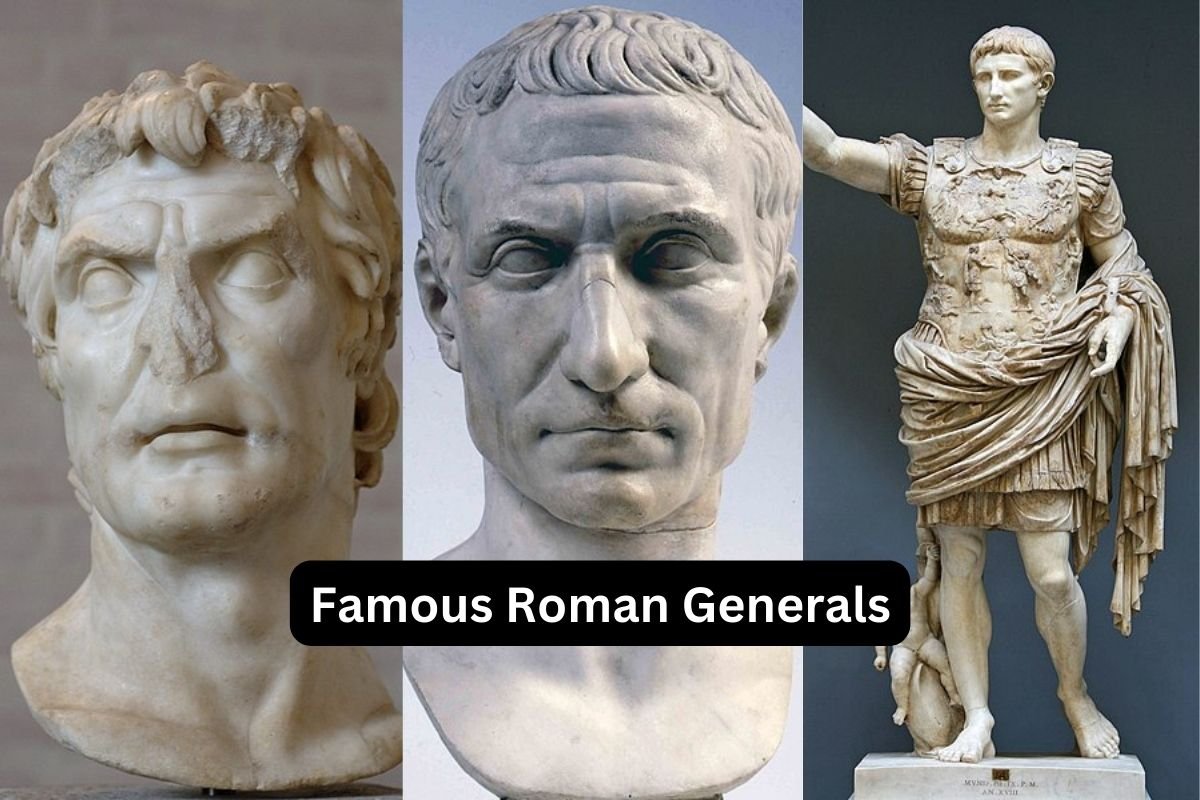
Rome. The very word conjures images of mighty legions, towering aqueducts, and the relentless ambition of men who shaped an empire spanning continents and centuries. More than just a collection of historical facts, the sagas of Historical Roman Names: Emperors, Generals & Famous Figures offer a window into the human spirit—its triumphs, its follies, and its enduring legacy. These weren't just names in dusty scrolls; they were the architects, conquerors, philosophers, and even tyrants whose decisions echoed across millennia, fundamentally influencing law, governance, language, and culture as we know it today.
If you’ve ever wondered about the real stories behind names like Caesar, Augustus, or Hadrian, you’re in the right place. We’ll delve into the lives of the most influential figures, offering a comprehensive yet captivating look at the individuals who built, transformed, and sometimes tore down one of history's greatest civilizations.
At a Glance: Key Takeaways from Rome's Luminaries
- The Power of One: Individual Roman emperors and generals often dictated the course of vast geopolitical shifts.
- Beyond the Battlefield: Roman influence wasn't just military; it extended to law, infrastructure, philosophy, and art.
- Legacy Through Names: Many Roman names, like Caesar, became titles or symbols of power, echoing through history.
- The Pax Romana: Periods of great peace and prosperity were largely due to the strategic brilliance of a few key leaders.
- The Price of Power: Even the most successful figures often met violent ends or faced immense political turmoil.
- From Republic to Empire: The transition was fueled by the ambitions and rivalries of extraordinary individuals.
The Foundation Builders: Architects of an Empire
Before the empire truly solidified, ambitious figures laid the groundwork, often through fierce rivalry and military genius. Understanding their contributions helps contextualize the emperors who followed.
Julius Caesar: The Indispensable Catalyst
Born around 100 BC, Julius Caesar wasn't an emperor, but arguably the most crucial figure in the Roman Republic's demise and the Empire's eventual rise. A brilliant military general, a cunning statesman, and an eloquent writer, Caesar mastered the art of power. His relentless conquests in Gaul (modern-day France, Belgium, and parts of Germany) from 58-50 BC showcased his tactical prowess, extending Roman influence far beyond its traditional borders. He even made forays into Britain, a feat that further cemented his legendary status.
Caesar’s political maneuvering was equally audacious. He formed the First Triumvirate, an unofficial alliance with Pompey the Great and Marcus Crassus, to consolidate power. This uneasy alliance eventually fractured, leading to a devastating civil war where Caesar decisively defeated Pompey. Declared "dictator for life," his reforms included the Julian calendar, which largely resembles our modern calendar. However, his dictatorial aspirations proved too much for some senators, leading to his famous assassination on the Ides of March in 44 BC. His death plunged Rome into another civil war, paradoxically paving the way for his adopted heir, Octavian, to emerge as the first emperor.
Gaius Marius: Revolutionizing the Roman Army
Decades before Caesar, Gaius Marius (157 BC – 86 BC) profoundly reshaped the Roman military, a transformation that had long-term implications for Roman politics. As a general and statesman, Marius understood that Rome's reliance on land-owning citizens for its army was unsustainable for prolonged conflicts. His revolutionary reforms during the Jugurthine War allowed non-landowners—the urban poor—to enlist.
This created a more professional, standing army, loyal not to the Republic, but often to their general who promised land and spoils. While enhancing military effectiveness, it also contributed to the rise of powerful, individualistic commanders and the civil wars that eventually doomed the Republic. Marius himself was elected consul an unprecedented seven times, and his bitter political struggles with his protégé, Sulla, foreshadowed the destructive rivalries that would define late Republican Rome.
Cicero: The Voice of Republican Virtue
Amidst the power struggles of generals, Cicero (106 BC – 43 BC) stood as a titan of rhetoric and a staunch defender of republican values. A senator, lawyer, and orator of unparalleled skill, Cicero's speeches could sway crowds and senators alike. He navigated the treacherous political waters of his era, often finding himself at odds with the rising power of figures like Caesar.
Cicero was also a prolific writer and philosopher, whose works on rhetoric, politics, and ethics profoundly influenced Western thought for centuries. His unwavering opposition to tyranny, particularly against Mark Antony after Caesar's death, ultimately cost him his life. He was executed in 43 BC by Antony's supporters, a tragic end for one of Rome's most eloquent voices.
The Imperial Zenith: Emperors Who Defined an Era
With the Republic's tumultuous end, a new era dawned—that of emperors. These men held immense personal power, and their reigns often brought either unprecedented stability and expansion or catastrophic decline.
Augustus Caesar: Forging the Empire and the Pax Romana
Augustus Caesar (born Gaius Octavius, 27 BC – AD 14), Julius Caesar’s adopted son, achieved what his predecessor could not: he brought lasting peace and transformed the Roman Republic into an empire. Ruling for over 40 years, Augustus initiated the Pax Romana, a period of peace and prosperity that lasted for over two centuries.
His reign was characterized by incredible stability and reform. He created a new, efficient tax system, established a professional standing army, and undertook massive building programs across the empire, constructing temples, roads, and aqueducts that integrated and fortified Roman territories. Augustus masterfully consolidated power while maintaining the appearance of republican institutions, a delicate balance that ensured his long rule and Rome’s enduring strength. If you're curious about Roman naming conventions or want to try creating a name that sounds like it belongs to this era, you might enjoy exploring a Roman name generator.
Tiberius: Augustus's Capable but Controversial Heir
Augustus's stepson and successor, Tiberius (AD 14 – AD 37), inherited an empire at its zenith. A highly capable military commander and administrator, he continued many of Augustus's prudent policies, maintaining imperial stability and even expanding borders by annexing regions like Cappadocia and Commagene.
However, Tiberius's reign was also marked by a growing tyranny, suspicion, and a chilling series of treason trials. He eventually retreated to the island of Capri, governing through his prefect Sejanus, whose abuses of power further darkened Tiberius's reputation. Despite his administrative competence, his personality cast a long shadow, making him one of Rome's more complex early emperors.
The Flavian Dynasty: Restoring Order and Grandeur
After a tumultuous "Year of the Four Emperors" following Nero's death, Vespasian (AD 69 – AD 79) rose to power, founding the Flavian dynasty (AD 69 – AD 96). He was a pragmatic and popular general who brought much-needed stability back to Rome. Vespasian immediately initiated major construction projects, most famously beginning the construction of the Colosseum, a testament to Roman engineering and entertainment.
He also implemented crucial financial reforms to replenish the imperial treasury and oversaw the rebuilding of Rome after the civil wars and devastating fires. His reign also saw the expansion of the empire into parts of Britain and Germany, consolidating Roman control. His sons, Titus and Domitian, continued the dynasty, with Titus completing the Colosseum and overseeing the siege of Jerusalem. This period saw Rome regain its confidence and grandeur after a period of internal strife.
Trajan: The Empire's Greatest Extent
Trajan (AD 98 – AD 117) is widely considered one of Rome's greatest emperors, known for his military prowess, benevolent rule, and extensive building programs. Under his leadership, the Roman Empire reached its greatest territorial extent, conquering Dacia (modern Romania) and parts of the Middle East.
His legacy is immortalized in monumental constructions like Trajan's Forum and the iconic Trajan's Column, which meticulously depicts his Dacian campaigns. Trajan also championed social welfare, introducing programs like the alimenta, which provided financial support for poor children throughout Italy. His reign is a benchmark for imperial success, balancing military might with public welfare and cultural patronage.
Hadrian: Consolidating and Defending
Hadrian (Publius Aelius Hadrianus, AD 117 – AD 138), Trajan's successor, marked a strategic shift in imperial policy. Rather than further expansion, Hadrian focused on consolidation and defensive strategies. His most famous achievement is Hadrian's Wall in Britain (built 122-128 AD), a formidable defensive barrier designed to secure the northern frontier against barbarian incursions.
A true polymath, Hadrian was a great patron of arts and literature, a philosopher, and an architect. He traveled extensively throughout the empire, personally inspecting borders and projects. His architectural legacy includes the rebuilt Pantheon in Rome and his sprawling villa at Tivoli, demonstrating his sophisticated taste and vision. Hadrian understood that a sustainable empire needed secure borders and internal cohesion as much as external conquest.
The Antonine Dynasty: Rome's Golden Age
The period encompassing emperors like Trajan, Hadrian, and Marcus Aurelius is often referred to as the Antonine Dynasty (AD 96 – AD 192), a "Golden Age" for Rome. This era, largely coinciding with the Pax Romana, saw unprecedented peace, prosperity, and internal stability. Trade flourished, cities grew, and arts and sciences reached new heights, largely free from major external threats and internal conflicts. It's the kind of period that makes one appreciate the long-term impact of stable, capable leadership.
Philosophers, Plagues, and Persecutors: The Later Emperors and Defining Figures
Even during golden ages, challenges loomed, and the character of emperors continued to shape Rome's destiny.
Marcus Aurelius: The Philosopher on the Throne
Marcus Aurelius (AD 121 – AD 180) was the last of the "Five Good Emperors" and perhaps the most unique: a philosopher-emperor whose Stoic writings, Meditations, remain a cornerstone of Western philosophy. He approached his duties with a profound sense of reason and duty, even as his reign was beset by immense challenges.
Marcus Aurelius faced significant military threats from the Parthians in the East and Germanic tribes along the Danube, requiring him to spend much of his rule on campaign. Internally, Rome grappled with the devastating Antonine Plague and a major rebellion by Avidius Cassius. Through it all, his Stoic principles guided his leadership, emphasizing self-control, resilience, and a dedication to the common good—a stark contrast to some of his more flamboyant predecessors.
Nero: The Embodiment of Imperial Decadence
In stark contrast to Marcus Aurelius stands Nero (AD 37 – AD 68). Ruling from AD 54 to AD 68, Nero is arguably the most infamous Roman emperor, synonymous with tyrannical, erratic behavior, cruelty, and extravagance. Accused, though likely falsely, of starting the Great Fire of Rome in AD 64 to clear land for his lavish "Domus Aurea" (Golden House), he further alienated the populace by persecuting Christians, blaming them for the fire.
Nero's reign was characterized by instability, paranoia, and a series of shocking acts, including the murders of his mother and wife. His reckless spending and increasingly despotic rule led to a widespread revolt, culminating in his declaration as a public enemy and his forced suicide in AD 68, bringing an end to the Julio-Claudian dynasty.
Claudius: The Unlikely Emperor
Claudius (10 BC – AD 54), who ruled from AD 41 to AD 54, offers a fascinating counter-narrative to the likes of Nero. Initially underestimated and often ridiculed due to a physical disability (possibly a limp and stammer), he became emperor almost by accident after Caligula's assassination. Yet, he proved to be a surprisingly capable and intelligent administrator and military leader.
Claudius initiated numerous public works, including new aqueducts for Rome and improvements to the port of Ostia. Critically, he oversaw the successful invasion and expansion of the Roman Empire into Britain, a significant military achievement. He also reformed the legal system and extended Roman citizenship more broadly. His reign demonstrates that competence can emerge from unexpected places, defying initial prejudices.
Commodus: The Beginning of the End
The son of Marcus Aurelius, Commodus (AD 161 – AD 192) brought the Antonine Dynasty to a stark, violent end. Ruling from AD 180 to AD 192, he abandoned his father's philosophical diligence for a life of extravagance, cruelty, and self-indulgence. He famously fancied himself a gladiator, participating in staged fights and exhibiting an authoritarian style that quickly eroded the goodwill cultivated by his predecessors.
Commodus’s erratic and increasingly despotic behavior, coupled with a period of instability and intrigue, alienated the Roman Senate and military. His assassination in AD 192 not only ended the Antonine dynasty but also plunged Rome into another period of civil war, setting the stage for the tumultuous "Crisis of the Third Century," a stark reminder of how quickly stable power can unravel.
Constantine the Great: The Empire's Christian Dawn
Centuries later, Constantine the Great (AD 272 – AD 337), ruling from AD 306 to AD 337, would fundamentally alter the course of Roman and indeed, Western, history through his embrace of Christianity. His conversion began dramatically with a vision before the Battle of Milvian Bridge in 312 AD, where he attributed his victory to the Christian God. This event marked a turning point, signaling the end of centuries of Christian persecution.
Constantine, alongside Licinius, issued the Edict of Milan in 313 AD, granting religious tolerance throughout the empire. His lasting legacy, however, is not just religious freedom but also the founding of Constantinople (formerly Byzantium) as a new capital for the Roman Empire. This strategic city, later known as Istanbul, became a thriving center of Christian culture, learning, and imperial power, effectively shifting the empire's focus eastward and laying the groundwork for the Byzantine Empire.
Beyond the Throne: Scholars and Storytellers
Not all influential figures commanded legions or sat on thrones. Some shaped Rome through their intellect and observations.
Tacitus: The Sharp-Eyed Historian
Tacitus (born AD 56) was a Roman historian and senator whose incisive prose provides some of the most critical insights into imperial politics and society. His two major surviving works, The Annals (covering the reigns from Tiberius to Nero, AD 14-68) and The Histories (covering the Year of the Four Emperors and the Flavian dynasty, AD 68-96), offer a penetrating, often critical, view of Roman power.
Tacitus was a moralist who believed in the virtues of the Republic and viewed the corruption and tyranny of some emperors with dismay. His sharp observations, psychological insights into his subjects, and rhetorical skill make his histories compelling and indispensable for understanding the Roman imperial period. He helps us see these powerful figures not just as historical events but as complex human beings.
Understanding the Roman Name Structure
When you encounter names like Gaius Julius Caesar or Publius Aelius Hadrianus, you're seeing the traditional Roman naming system, known as the tria nomina (three names), which was common among male citizens in the Republic and early Empire.
- Praenomen: The personal name, like our first name (e.g., Gaius, Marcus, Publius). There were only about a dozen common praenomina, so they often didn't help much with identification in larger groups.
- Nomen (Gentilicium): The family name, indicating the gens or clan (e.g., Julius, Cornelius, Fabius). This was the most important name, signifying one's lineage and social standing.
- Cognomen: An additional family name or nickname, often descriptive (e.g., Caesar - perhaps meaning 'hairy' or 'cut'). This helped distinguish branches within a large gens. Later, an agnomen (a fourth name) could be added for a special achievement, like "Africanus" for Scipio.
Women typically used the feminine form of their father's nomen (e.g., Julia, Cornelia). Slaves, freedmen, and non-citizens had different naming conventions. Over time, particularly in the later empire, the system became more flexible, but the traditional tria nomina remains a powerful symbol of early Roman identity.
Why These Names Still Matter: The Echoes of Rome
The stories of Rome’s emperors, generals, and thinkers are far from mere ancient history. Their decisions, policies, and personalities continue to resonate in surprising ways:
- Political Systems: The concepts of checks and balances, the rule of law, and the idea of a republic (even an empire masquerading as one) have roots in Roman thought and practice. Many modern nations, including the United States, drew inspiration from Roman political structures—often to avoid their pitfalls.
- Language and Literature: Latin, the language of these figures, forms the bedrock of Romance languages (French, Spanish, Italian, Portuguese, Romanian) and has heavily influenced English. Roman literature, law, and philosophy remain foundational texts in Western education.
- Architecture and Engineering: The Romans’ monumental achievements—roads, bridges, aqueducts, and iconic structures like the Colosseum and Pantheon—demonstrated engineering principles still admired and sometimes emulated today.
- Military Strategy: The Roman legions and their commanders, from Marius to Trajan, developed tactical and organizational innovations that profoundly influenced military thought for centuries.
- Cultural Icons: Names like Caesar, Augustus, and Nero are immediately recognizable and carry cultural weight, often used as archetypes for leadership, power, or tyranny.
The impact of these Historical Roman Names: Emperors, Generals & Famous Figures extends far beyond their own lifetimes. They built a world, often through blood and iron, that shaped the very trajectory of human civilization. By understanding their lives and legacies, we gain not only historical context but also profound insights into leadership, ambition, and the enduring human quest for power and order. Their stories are a testament to the fact that while empires may fall, the names and narratives of those who built them can become immortal.